Craigslist Cash Cow Pdf Editor
Posted : admin On 23.08.2019Looking to create a classified ads site like Craigslist or Gumtree? The massive success of those two behemoths certainly proves a market need. But how do you actually go about mimicking their functionality?
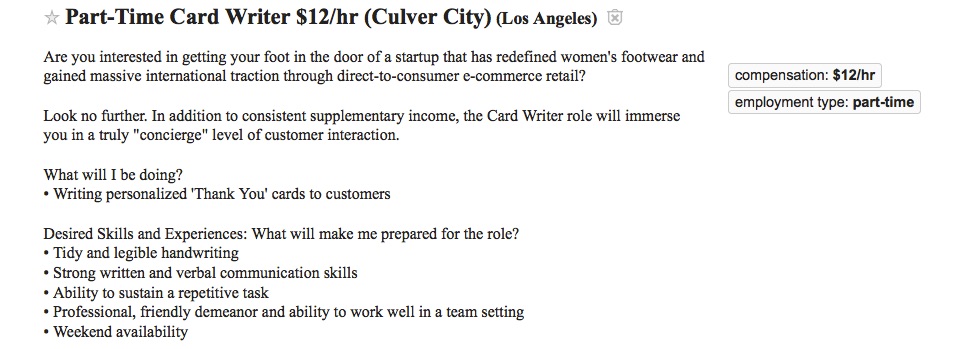
Class b truck driver jobs on craigslist in lakeland favorite this post Oct 29 HOME DAILY LOCAL LOADS!!!!! The company's two cash cows - operating Help for all Office apps. Easy CD burning and DVD burning, and everything you need to edit, enjoy and share photo, video, and audio. The Secrets Of Craigslist Unlimited Phone Verification Accounts For Craigslist 20 PLR Articles About CraigsList Craigslist Profits Craigslist Cash Cow Ebook Master Resell Rights The Craigslist. Looking to create a classified ads site like Craigslist or Gumtree? The massive success of those two behemoths certainly proves a market need. But how do you actually go about mimicking their functionality? As you might notice, we’re big fans of the WordPress CMS. And as luck would have it, it’s.
As you might notice, we’re big fans of the WordPress CMS. And as luck would have it, it’s easy to create a classified site using WordPress!
In this post, I’ll give you a tutorial on how to set up a classifieds site like Craigslist using a free plugin called Another WordPress Classifieds Plugin.
Then, in case you want a bit of a different approach, I’ll suggest some classifieds themes to help you achieve a bit more premium looking classifieds site. Let’s dig in!
Step-by-Step: Creating a WordPress Classifieds Site
Any good classifieds site needs at least these three core elements:
- Listings that can be divided up into categories or tags
- An easy way for visitors to search listings
- An easy way for visitors to submit their own listings
Another WordPress Classifieds Plugin can help you do all of those things. The only potential snag is that, because it’s a plugin, it may or may not look good with your specific theme. So if you want a guarantee that your classifieds site looks perfect out of the box, you should skip to the next section where I give you few themes that are dedicated to creating a classifieds site.
One benefit of using a plugin like this one is that it’s easy to make classifieds just a part of your site, instead of dedicating your entire site to classifieds.
Ok, let’s carry on with the tutorial…
Step 1: Install and Activate Another WordPress Classifieds Plugin
To get started, install and activate Another WordPress Classifieds Plugin. It’s free and listed at WordPress.org, so you can install it directly from your WordPress dashboard:
As soon as you activate it, you’ll have a very basic classifieds site already:
All the functionality is there… you just need to customize it to get things working perfectly!
Step 2: Choose Whether You Want Free or Paid Listings
If you’d like, the plugin lets you choose between free and paid listings. With free listings, anyone can post an ad without paying anything. Because this is how sites like Craigslist operate, I’ll continue the tutorial assuming that you want to allow free listings.
But just know that you can turn on paid listings if you’d like.
To ensure that your listings are free, go to Classifieds → Settings → Payment and make sure the Charge Listing Fee? box is unchecked (that should be the default):
As you can tell, there a lot more Settings options. But the plugin is set up so it’s super easy to get started. That is, you can leave the vast majority of these settings as the default. If you want to get really granular with your classified site’s settings, you can do that here. But don’t feel like you need to configure every setting option.
Some things you should do, though, are:
- Set up terms of service
- Choose whether or not to include AdSense ads
That’s because these elements will show up on the front-end of your site by default. So you need to make sure they’re customized.
Step 3: Choose Your Listing Categories
Next up, you need to choose the categories for all of your classified ads. To do that, you can go to Classifieds → Categories. To add a new category, just enter a name, choose whether you want it to be a top-level category or nest it under another category, and click Add new category:
Create as many categories as you’d like. These will show up on the front-end for your visitors to both browse and post to.
Step 4: Make Your Classifieds Page Your Homepage
If you want your homepage to show your classifieds listings, you’ll need to make the page created by the plugin your homepage. To do that, go to Settings → Reading and make AWPCP your homepage:
You can also rename the page just like you would any other page. Doing both of those things should give you a front page that looks something like this:
Obviously, you may need to do a little styling to get things looking just right. But all of the functionality is there now.
How People Submit New Classified Ads
If a visitor wants to submit a new classifieds listing, all they need to do is hit the Place Ad button.
First, they’ll choose a category:
Then, they’ll enter their details and contact information:
After that, they’ll be able to upload any relevant images. Images must meet your basic requirements. If they don’t, users will get a prompt telling them about the issue:
And then they can place their ad!
Going back to my test site’s homepage, you can see that there’s now a new entry in the For Sale category:
The plugin will also email the ad creator with an Access Key that allows them to edit their ad at a later date (if you allow editing, that is).
And as the site admin, you’ll be able to manage all of the listings on your site by going to Classifieds → Listings:
And that’s it! You’ve got a WordPress classifieds site. If you need more functionality, you can also extend with some of Another WordPress Classifieds Plugin’s premium modules.
Other Options: WordPress Classifieds Themes
As I touched on before, themes offer a different approach to creating a classifieds site with WordPress. Instead of needing to add custom styling to make a plugin like Another WordPress Classifieds Plugin look good, you can be 100% sure that your site looks perfect out of the box.
But the downside is that you’ve locked yourself into your site being about classified listings always and forever. Obviously, if you’re creating a site solely to showcase classifieds, that probably won’t be an issue.
In which case, consider one of these WordPress classifieds listing themes.
ClassiPress
ClassiPress is a popular classifieds theme for WordPress that makes it easy to accept free or paid listings, as well include paid ads. One especially nice thing about the plugin is that it includes AJAX search with autocomplete.
ClassiPress costs $69.
ClassifiedEngine
ClassifiedEngine helps you create a modern looking classifieds site built on WordPress. If you want something that looks a bit upmarket compared to sites like Craigslist and Gumtree, it’s a good option.
ClassifiedEngine costs $89.
WordPress Classified Ads Theme
WordPress Classified Ads Theme from SiteMile is a nice mix of modern and “classic Craigslist look”. It has built-in spots for advertising and nice image based categories.
Like ClassiPress, WordPress Classified Ads Theme costs $69 for a single site license.
Wrapping Things Up
Whether you want to create a free classifieds listing site like Craigslist, Gumtree, or FreeCycle, or a site that sells premium classified ads (or both!), these plugins and themes can help you get the job done.
I went with Another WordPress Classifieds Plugin for the tutorial because I love how it offers an exceptionally detailed settings panel, while still being easy to use. Despite how flexible it is on the backend, you can still pretty much install it and have it working right away.
But if you want to go with the theme approach, I don’t blame you. It gives you a dedicated platform, even if you do lose some flexibility by going that route.
And if you’re looking to get a jump start on populating your classified ads site with listings, you can use WP RSS Aggregator to pull in listings from other sites to get a good content base.
Related Articles
So, are you hungry of new, fresh and trendy WordPress themes? Please no worries, we are here with another roundup of great and useful free themes, all of them carefully…
The Internet has opened the doors for blog owners to do business and connect with people overseas. Distance is no longer a barrier, but language is. If you want to…
Apart from the WordPress plugin repository, there are other ways of searching for free WordPress plugins, here are some of them.
eBay is the best opportunity we have seen in the last three years. The company has all of the characteristics sought by value investors: a stable-growth core business, temporary unpopularity, cash cow buying back shares, well-aligned management, smart capital allocation, and trading at a good price (6% FCF yield). Our conversations with multiple buy-side analysts indicate that these factors comprise the collective contrarian thesis on eBay. We agree that these factors are critical, correct, underappreciated by the sell-side, and would make for an excellent long thesis on eBay. But our conversations with buy-side analysts also verified a more important point for our purposes: there are two additional aspects of the eBay long thesis that are massive and entirely missed by the market. This write-up concerns those two factors, and concludes with a full valuation and final commentary. Our price target is $48/share for 46% upside.
Please find the original presentation deck from the Sohn Conference at the end of this article.
Cash Cow Game
Part I: Merchant of Record
eBay spun off PayPal in July 2015. Three details of their post-spinoff operating agreement are of interest to us. First, the agreement lasts for five years, concluding in July 2020. Second, the agreement requires continued use of PayPal as eBay’s transaction aggregator, netting PayPal a fee for each transaction processed. The third detail is likely the most unappreciated part of the eBay story, and concerns eBay’s plans to become a “merchant of record.”
A merchant of record is the party who intermediates a transaction. As eBay’s merchant of record, PayPal intermediates every transaction. Buyers pay PayPal, and PayPal pays the seller. PayPal takes a ~3.5% fee from the buyer and pays a ~1% fee to the acquiring merchant bank that processes all transactions in bulk. The spread, less SG&A and fraud-related costs, is PayPal’s profit from serving as eBay’s merchant of record. All major e-commerce sites today are merchants of record, including Amazon and Alibaba. eBay has been the historical exception due to its ownership of PayPal, which profited handsomely by processing every individual eBay transaction for a ~2.5% fee on gross merchandise volume (GMV).
But eBay does not own PayPal anymore, so why does this relationship continue? In response to a proxy fight for splitting eBay and PayPal led by Carl Icahn in 2014, eBay’s management noted the following:
- PayPal grows faster because of eBay
- eBay accelerates the success of PayPal
- Data sharing leads to more profitable growth
- eBay Inc. provides efficient capital for PayPal
- Commerce and payments are converging
Careful readers would also note the disclosure that “eBay delivers about 30% of PayPal’s new users at virtually no cost, more than 30% of PayPal’s revenues and approximately 50% of PayPal’s profits.” The benefits to eBay are much less clear, but their pre-spinoff relationship is frozen until 2020 all the same.
When the operating agreement expires in July 2020, eBay will have the opportunity to establish itself as a merchant of record. But once they can end the relationship, how do we know that they will? One could certainly speculate about the hiring of Alyssa Cutright to “lead eBay’s global strategy and operations of billing and payments.” One could also research eBay’s early history with Wells Fargo and the use of Billpoint as a payments intermediary, perhaps seeing this as a blueprint for a post-PayPal future. Easiest of all, one could pay close attention to Section XIV of the eBay-PayPal operating agreement:
“Following the three (3) year anniversary of the Effective Time, eBay shall be permitted to declare itself as a Merchant of Record for transactions effected by third Persons in up to two (2) Covered Jurisdictions as selected by eBay in its sole discretion (each, a “Test Jurisdiction”); provided, that (i) the GMV transacted as a Merchant of Record on all eBay Covered Properties in each Test Jurisdiction during the fourth (4th) year of the Term shall not exceed five percent (5%) of the GMV on all eBay Covered Properties in such Test Jurisdiction during such year, and (ii) the GMV transacted as a Merchant of Record on all eBay Covered Properties in each Test Jurisdiction during each of the fifth (5th) year of the Term and the Tail Period shall not exceed ten percent (10%) of the GMV on all eBay Covered Properties in such Test Jurisdiction during each such year.”
This short footnote sets the groundwork for eBay’s full transition to a merchant of record model in mid-2020. Provisions for test jurisdictions as early as 2018 give eBay the opportunity to test the merchant of record model, with full rollout possible at the expiration of the operating agreement in 2020. eBay has a financial incentive to pursue such action due to the substantial value it would create. Our calculations for the upside from such action are based on the terminal value of such action discounted back from 2020:
Rationale for assumptions
- 84.26 billion = trailing 12-month GMV as of Q1 2017
- 3.47% = PayPal aggregate take rate (last disclosed in 2014); this number blends in the 0% take rate on various Braintree platforms (i.e. Venmo), meaning the true on-eBay take rate is closer to 4%.
- 1.0% = back-end fees for debit and credit transactions (network fees, acquirer fees, fraud fees, etc.).
- 50% = incremental SG&A costs for creating a merchant of record arrangement within eBay, including costs for incremental hires, customer service expenses, and ironing out the kinks.
- 25% = tax rate (eBay’s historic tax rate is closer to 20%)
- 3% = terminal rate
- 10% = discount rate
The catalyst for this value realization will be the disclosure and detailed explanation of plans to become a merchant of record. We expect this to transpire no later than mid-2018, as eBay will begin exploring test jurisdictions at this time. Earlier catalysts might include management discussions on future earnings calls or disclosures by PayPal of this risk in their financial statements. This upside is PayPal’s downside, and the merchant of record transaction could make for a separate, compelling short thesis on PayPal.
Part II: Classifieds
Classifieds are local markets for the exchange of services and secondary goods. They are basically hyper-local versions of eBay. Americans are generally familiar with Craigslist, the dominant classifieds service in the United States. eBay owns a dozen major classifieds services worldwide, ten of which are dominant in their national markets. High-level information about eBay’s classifieds holdings is quite promising: eBay’s classifieds services have the most popular mobile applications in eight countries, 29% yearly growth in page views, 270 million unique monthly visitors, and over 50 million ads posted each month. Classifieds are a higher-quality business than eBay’s main marketplaces business (and indeed, one of the highest-quality businesses we have ever seen) for several reasons:
1. Monopolistic: 10 of the 12 classifieds services owned by eBay are national monopolies. Marktplaats.nl dominates the Netherlands, Mobile.de dominates Germany’s automotive market, Kijiji dominates Canada—the list goes on. Classifieds have the most powerful moat in business: network effects. Each new user benefits from the presence of existing users à-la social media, and each new user widens the moat between the winner and its competitors.
2. Higher Margins: eBay’s classifieds services have ultra-high operating margins near 60% (an estimate based on comparable companies, as eBay does not disclose classifieds data), versus 30% for its core marketplaces segment. Margins are higher for classifieds because the segment requires effectively zero marketing and maintenance expense. Moreover, the high fixed costs of the segment offer massive margin expansion. Most important, the monopolistic nature of the business creates huge untapped pricing power. Examples from comparable businesses in other countries (Schibsted and Naspers) indicate that operating margins could exceed 70% as the segment matures.
3. Faster Growth: the classifieds services are growing 15% top-line. Some platforms, such as the U.S.-based mobile offering Close5, are growing at >100% top-line. This compares favorably to eBay’s core marketplaces segment, growing at 5% FX-neutral annually. This fast growth will continue for years due to roll-ups of smaller competitors and expansion into adjacent countries and verticals. Moreover, as the segment becomes a larger overall share of eBay’s total profits, the firm will deserve a higher multiple from faster growth.
But crucially, the market is missing the value of eBay’s classifieds holdings. In 8000+ pages of sell-side analyst reports published since the spinoff of PayPal in July, only one analyst (at UBS) took any time to discuss eBay’s classifieds holding in depth. Interestingly, this analyst placed a price target on eBay that was 50% higher than the second-highest price target. We also note that the buy-side analysts with whom we spoke have shown zero interest in eBay’s classifieds portfolio and assign trivial value to its assets. One Seeking Alpha contributor recently noted that “concerns about eBay’s growth are valid considering that it makes its money from its marketplaces and ticketing services. It does not have significant revenue outside of the two.”
This lack of appreciation for the Classifieds segment is especially interesting when one compares it with the new darling of Wall Street analysts, StubHub. Classifieds LTM revenue is $804 million versus $964 million for StubHub. Classifieds likely commands margins near 60% (again, very reasonable based on competitors’ data; see here for margin details on Leboncoin, a comparable service owned by Schibsted). Meanwhile, StubHub commands margins closer to 30%. Revenue times margin equals an estimated EBIT of $482 million for Classifieds and $289 million for StubHub, meaning that Classifieds contribute 67% more EBIT than StubHub to eBay. But you won’t find that in a sell-side report.
Two plausible explanations for the under-appreciation of eBay classifieds are management’s lack of detailed disclosure on the segment and the lack of U.S.-based comparable companies. Gathering the relevant data for valuing each of eBay’s classified businesses required an arduous search for tiny pieces of information that we believe most analysts would not have endured. Moreover, U.S.-based analysts do not appear to understand the nature of classifieds markets because there are no comparable companies in the U.S. The only major U.S. classifieds service is Craigslist, which is private.
So what is the Classifieds segment worth? We have calculated the following valuation:
Rationale for assumptions
- 804 million = trailing 12-month revenue as of Q1 2017
- 422 = free cash flow produced by Classifieds in 2017, (804)*(70%)*(1-25%) = 422 million
- (422*10) = value of interim payments before terminal period; because the growth rate equals the discount rate, they cancel out during the projection period, i.e. 1.1 1 /1.1 1 = 1.
- 10% = growth has trended at 10-15% over the last five years. Comparable firms (Schibsted and Naspers) estimate 15% growth over the long-term due to tailwinds from further market penetration, monetization, and new listing verticals like real estate and employment classifieds.
- 70% = operating margin, based on mature peers owned by Schibsted (i.e. Blocket and Finn).
- 25% = tax rate (eBay’s historic tax rate is closer to 20%)
- 4% = terminal rate
- 10% = discount rate
eBay’s Classifieds segment has plenty of room for future growth. The segment benefits from a high degree of operating leverage, has a sticky and price insensitive user base, is recession-proof, holds no inventory, and has several levers for additional monetization that have not yet been deployed. This segment may well be the long-term growth engine for eBay.
Part III: StubHub and Marketplaces
A full valuation of eBay also requires valuing its StubHub and Marketplaces segments. The market has a fair understanding of these components, and our valuations for are more conservative than consensus. The valuations for both segments are not central to our thesis, and they are offered primarily in order to conduct a sum-of-the-parts valuation for the entire company.
Our valuation for Marketplaces (eBay’s core segment) is straightforward. Current management guidance on revenue growth is 5% FX-neutral annually, which matches closely with historical FX-neutral growth rates over the last decade. We have chosen to exclude FX headwinds from our projections because we expect those headwinds to normalize or reverse or time. We place Marketplaces revenue growth at 3% in perpetuity for conservatism. We assume normalized margins of 30%, which adjust from current 25% operating margins that are temporarily depressed due to costs related to the structured data initiative and search engine optimization to recover eBay’s traffic after Google’s search engine algorithm update. Our tax rate is 25% and our discount rate is 10%. Use trailing 12-month revenue of 7.28 billion, we arrive at the following valuation for Marketplaces:

Our valuation for StubHub is quite a bit more conservative than market consensus. We do not factor in any additional pricing power, despite StubHub’s take-rate increasing 3% last year alone. We do not factor in any additional operating leverage that could cause margin expansion, despite the fixed cost leverage widely known to exist in two-sided marketplaces. We do not factor in market consolidation benefits despite StubHub’s dominance in a winner-take-all market (StubHub has nearly 5x the market share of its next-largest competitor, Ticketmaster). With these conservative assumptions in mind, we arrive at the following valuation for StubHub:
Rationale for assumptions
- 964 million = trailing 12-month revenue as of Q1 2017
- 217 = free cash flow produced by StubHub in 2017, (964)*(30%)*(1-25%) = 217 million
- (217*10) = value of interim payments before terminal period; because the growth rate equals the discount rate, they cancel out during the projection period, i.e. 1.1 1 /1.1 1 = 1.
- 10% = the segment grew nearly 40% last year, and management is guiding for 10-15% annual growth. The acquisition of TicketBis opens international markets, and the underpenetrated and massive total addressable market offers a long growth runway.
- 30% = operating margin, backed out from known Marketplaces and likely Classifieds margins
- 25% = tax rate (eBay’s historic tax rate is closer to 20%)
- 4% = terminal rate
- 10% = discount rate
Part IV: Conclusion
Including 2.20 billion of excess cash, the sum of our valuations is the following (in billions):
The current enterprise valuation of eBay is approximately 34 billion, implying 46% upside from current levels ($33.15 as of this writing) and a fair value of $48 per share. This valuation disconnect provides an ample margin of safety. Downside is further protected by a low valuation on the basis of normalized free cash flow (trading at 6% FCF yield), continued share buybacks (nearly 1 billion in buybacks are authorized for the remainder of 2017), and organic growth in each operating segment. Investors should be further comforted on the downside by the fact that eBay is a highly stable business that is consistently growing at a low-to-mid single digit rate with a sizable runway for continued growth. Investors in eBay can sleep soundly knowing that time and the math of compounding are on their side.
Catalysts for value realization include continued share buybacks, additional insider buying, management discussion of the merchant of record arrangement, a more detailed breakdown of the classifieds segment, strategic bolt-on acquisitions for the core segments, continued growth in the StubHub and Marketplaces segments, and pressure on management to act decisively on the merchant of record arrangement.
Thanks for reading.
Presentation from Sohn Conference
(Editors' Note: This is a republication of an entry in the Sohn Investment Idea Contest. This is the winner of the contest. All figures are current as of the entry's submission - the contest deadline was April 26, 2017).
Disclosure:I/we have no positions in any stocks mentioned, and no plans to initiate any positions within the next 72 hours.I wrote this article myself, and it expresses my own opinions. I am not receiving compensation for it. I have no business relationship with any company whose stock is mentioned in this article.